Longevity & healthy aging: From lifespan to healthspan
Key Highlights:
- Longevity is now a major global priority, with 73% of consumers considering healthy aging extremely or very important.
- The focus is shifting from extending lifespan to improving healthspan, emphasizing strength, vitality, and quality of life.
- Today’s top health concerns — sleep, weight, and energy — are directly linked to long-term aging outcomes and drive early adoption among younger generations.
- Aging well is increasingly seen as a holistic, proactive lifestyle, supported by growing engagement in nutrition, supplements, and wellness routines.
- Brands have new opportunities to develop science-backed formulations that help consumers build resilience and maintain vitality throughout life.
Longevity is no longer a niche biohacking concept — it has become a defining global health priority. As highlighted in our analysis of the Top Health & Nutrition Trends for 2026, healthy aging and proactive wellbeing are reshaping consumer expectations across categories. According to Innova Market Insights, 73% of consumers worldwide consider longevity and healthy aging extremely or very important.
As populations age and health awareness rises, the conversation is evolving. The focus is no longer on extending lifespan — it is about enhancing healthspan, ensuring that the added years are lived with strength and vitality.
A new definition of aging
Healthy aging is evolving beyond traditional, reactive healthcare. It is now a proactive, holistic lifestyle strategy embraced across generations.
Globally according to Innova Market Insights:
- 32% of consumers are interested in physical benefits that help them age well.
- 21% purchase food or beverages monthly to support healthy aging.
- More than 1 in 5 Gen X and Boomers take supplements to age healthily.
The demographic momentum behind longevity
This evolution is driven by a powerful demographic shift. According to the United Nations’ World Population Prospects 2024, the number of people aged 60+ will increase from 1.1 billion in 2023 to 1.4 billion by 2030.
As longevity becomes a defining feature of modern society, the goal is shifting from simply extending life to enhancing its quality — maintaining mobility, mental sharpness, and happiness well into later decades.
In this context, aging well becomes not just a personal aspiration but a societal necessity. Influencers and social media have accelerated consumer awareness. For example, tech entrepreneur Bryan Johnson has made longevity a public experiment, promoting disciplined lifestyle optimization through a widely viewed Netflix documentary. Meanwhile Social media platforms are now hubs for sharing wellness strategies — from gut health foods and strength training to sleep optimization and breathing techniques.

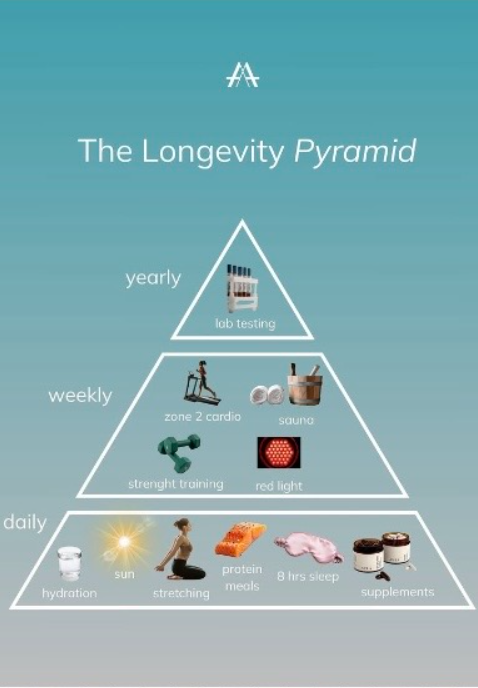
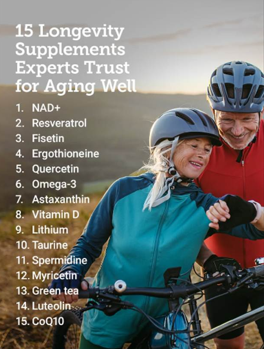
Source: Instagram
Today’s health concerns are tomorrow’s longevity drivers
Interestingly, the most common health concerns today directly connect to long-term aging outcomes. Weight management and sleep quality are the top physical health concerns globally (46% each). Both are deeply linked to metabolic health, cardiovascular risk, inflammation, and overall lifespan.
Closely behind is lack of energy, cited by 34% of consumers. Energy decline is particularly relevant in the longevity area. As we age, mitochondrial efficiency decreases, leading to lower adenosine triphosphate (ATP) production. Simultaneously, muscle mass declines, reducing metabolic capacity. When fatigue limits physical activity, a negative cycle accelerates further loss of strength and vitality.
Younger generations — Gen Z and Millennials — express even greater concern about sleep, weight, and energy than Boomers. This shows that longevity thinking is beginning earlier in life, reinforcing the shift toward prevention.
From lifespan to healthspan
Consumer expectations around aging have evolved. Rather than focusing on a single outcome, they are looking for a bunch of benefits that collectively support long-term vitality.
Indeed, aging well ranks among the most sought-after health outcomes globally, but what consumers truly value goes beyond the concept itself. Sleep quality, cognitive clarity, joint comfort, digestive balance, immune resilience, and cardiovascular support are increasingly viewed as interconnected levers of healthy aging. Additionally, 1 in 4 consumers seek long-lasting energy, reflecting a desire for sustained vitality rather than temporary stimulation.
Taken together, these insights show a large shift. Longevity is no longer about resisting age. It is about building resilience at the cellular, functional, and systemic levels — adding life to years, not just years to life.
Where innovation meets opportunity: Nexira’s longevity vision
This redefinition of longevity opens major opportunities for innovation. At Nexira, longevity is viewed as a multidimensional field extending into daily healthy aging with skin anti-aging, sexual health, memory & cognition, mobility solutions and to promoting healthspan naturally with a focus on cellular regeneration, muscle maintenance, cardiovascular health and microbiota balance.
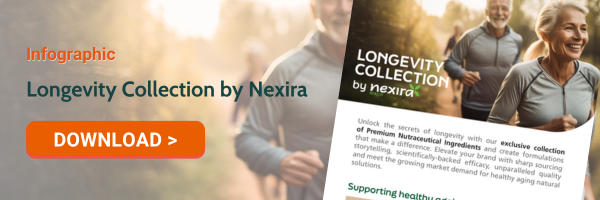
By aligning with this proactive healthspan strategy, brands can respond to the growing demand for solutions that support vitality at every stage of life.
Looking to develop differentiated longevity concepts?
Partner with Nexira to design evidence-based formulations addressing the key pillars of healthy aging — from gut and metabolic health to muscle maintenance and energy support.

Leslie Lannebere
International Marketing Manager, Nexira
Sources: Innova Market Insights, Innova Health & Nutrition Survey 2025, Innova Healthy Aging Across Generations – Global Report.
This communication is not intended to the final consumer. It provides scientific information for professionals only. Communications to the final consumer have to be checked according to local regulations in force, since the conditions of use are beyond our control. This statement has not been evaluated by the FDA. This product is not intended to diagnose, treat, cure, or prevent any disease.