
Macro Trends Driving the Fiber Revolution
Key Highlights – Macro Trends Driving the Fiber Revolution
- The global fiber gap drives innovation in food and beverages, from snacks to drinks.
- Fiber now supports sugar reduction, nutrient density, satiety, and metabolic wellness.
- The GLP-1 era is reshaping nutritional expectations, increasing demand for smaller portions that are protein-rich, fiber-rich, and highly nutrient-dense.
- Social media (#GutTok, #fibermaxxing) is accelerating high-fiber adoption, especially among younger consumers.
- Fiber is an increasingly strategic tool for brands seeking clean-label, plant-based, and sustainable product positioning and seeking to improve their nutriscore.
For years, protein has dominated product development, marketing messages, and consumer aspiration. But the landscape is changing. As PepsiCo’s CEO recently stated, “fiber will be the next protein.” Fiber is moving from a basic digestive aid to a hero ingredient—central to metabolic health, gut health, and better-for-you product innovation.
Several powerful macro trends are converging to fuel this “fiber revolution.” Here are the forces reshaping how brands formulate—and how consumers eat and drink.
1. The nutrition & fiber gap: a widening opportunity
Despite strong awareness of healthy eating, most consumers still don’t reach recommended fiber intakes. While guidelines suggest 25–30 grams per day, real intake in Western diets averages around 15 grams. At the same time, consumers increasingly associate food and beverages with wellness:
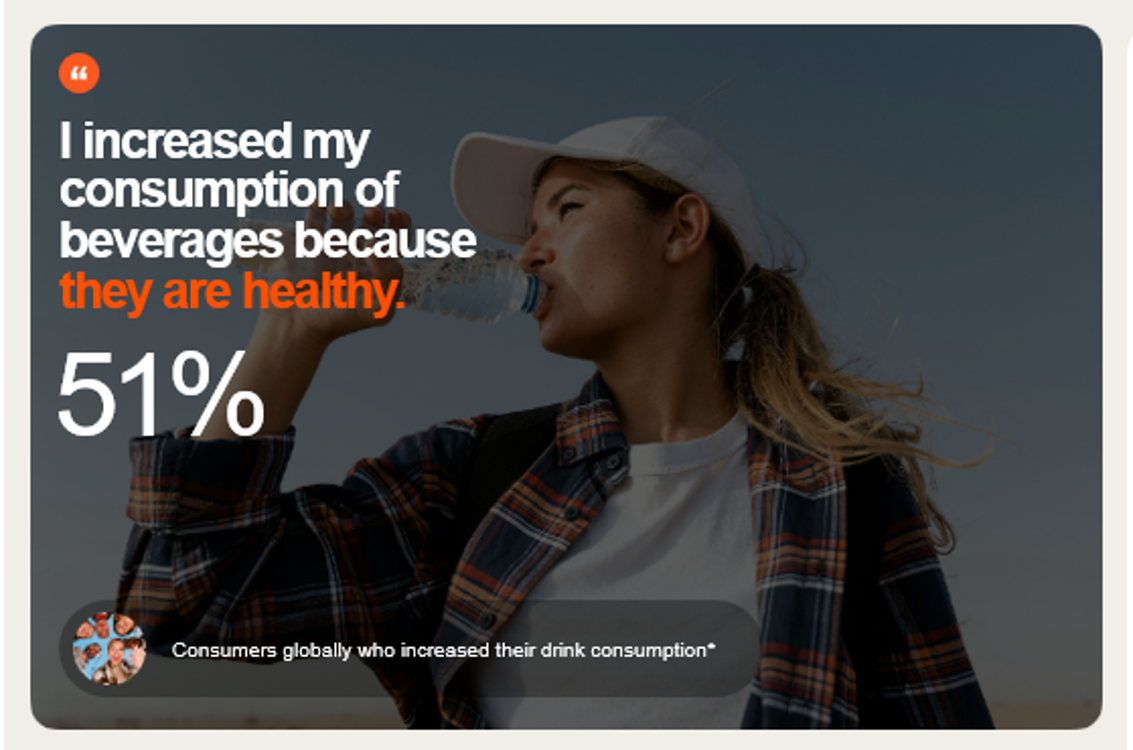
- over half of consumers say they choose beverages because they are “healthy”
- functional food & beverage markets continue growing, especially in the US
- fiber enrichment is becoming a central strategy in reformulation
This gap is both a health concern and an innovation catalyst. Brands are now turning to fibers to:
- improve nutritional density
- support digestive comfort
- differentiate products without resorting to artificial additives
Fiber-fortified beverages, cereals, snacks, and powders are emerging across many categories, far beyond traditional “high-fiber breakfast products”.
2. The GLP-1 era: new needs, new formulations
The rapid adoption of GLP-1 solutions has created an entirely new consumer group with specific nutritional needs and behaviors. Users frequently report:
- reduced appetite
- changes in food preference (less attraction to high sugar/fat foods)
- reduced emotional eating
- potential muscle loss
- gastrointestinal discomfort
This has direct implications for food, supplement, and beverage design. Smaller portions must now deliver:
- adequate protein
- sufficient micronutrients
- fiber for appetite regulation and digestive support
Fiber plays multiple helpful roles in this context, including satiety support, regularity, and microbiome modulation. As a result, “GLP-1–friendly” recipes and products are accelerating the adoption of higher-fiber formulations in mainstream categories.
3. Microbiome awareness goes mainstream
Just a few years ago, microbiome science was niche. Today, it’s a wellness megatrend. Consumers increasingly recognize the gut as a central health hub connected to:
- immunity
- energy
- mental wellbeing
- weight management
- skin health
- metabolic balance
The numbers reflect this heightened awareness:
- in 2024, 76% of consumers have heard of prebiotics vs 47% in 2022.
- 59% of people aware of the microbiome report changing their diet because of it
- digestive health ranks as a top global consumer priority
This awareness is pulling fiber into the spotlight, since prebiotic fibers directly nourish beneficial gut bacteria. As a result, fiber is no longer perceived as “just for transit”—it is becoming synonymous with overall wellbeing.
4. From #GutTok to #fibermaxxing: social media as accelerator
Social platforms are powerful drivers of nutrition behavior, particularly among younger consumers. Trends such as:
- #GutTok
- #fibermaxxing
are making high-fiber eating aspirational, fun, and shareable. Creators showcase:
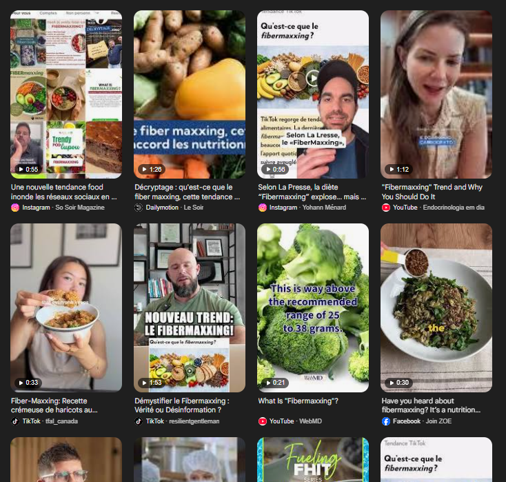
- daily fiber challenges
- creative high-fiber meals
- gut health transformations
- prebiotic beverage trends
Crucially, these trends reach Gen Z, one of the populations historically consuming the least dietary fiber. What was once considered “functional” or “clinical” is now becoming culturally cool.
5. Sugar reduction & reformulation pressure
Most of the brands are trying to improve their nutritional profile and their nutriscore.
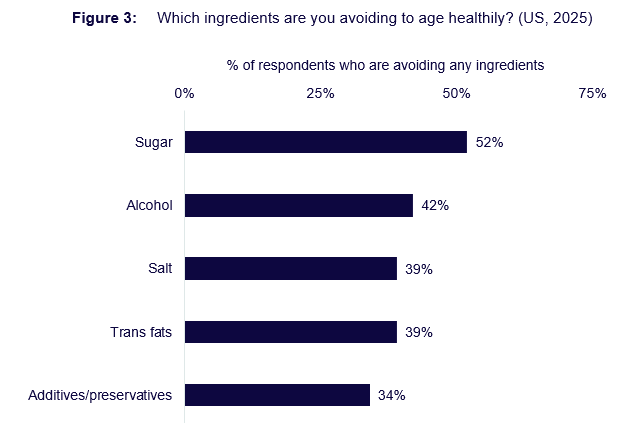
Innova Health & Nutrition Survey 2025
Sugar reduction remains the number one consumer request in food and beverage in the US. Fiber plays a strategic role here by helping to:
- replace sugar bulk
- improve texture and mouthfeel
- reduce glycemic impact
- support metabolic health messaging
As brands move away from artificial sweeteners and long ingredient lists, fiber offers both nutritional and technological benefits, making it an increasingly attractive reformulation tool.
6. Sustainability & clean label expectations
Consumers continue to demand:
- natural ingredients
- transparent sourcing
- minimal processing
- short ingredient lists

Many fibers fit seamlessly into this expectation, supporting sustainability narratives and “back-to-nature” positioning. As climate consciousness grows, ingredients that are plant-based, multifunctional, and label-friendly gain competitive advantage.
Fiber’s new role: from basic nutrient to wellness hero
All these forces—nutrition gaps, GLP-1 disruption, microbiome science, social media trends, sugar reduction, and sustainability—converge toward the same conclusion:
👉 Fiber is becoming one of the most aspirational ingredients in modern nutrition.
It is no longer framed only as “for regularity,” but as central to:
- gut health
- immunity
- energy
- metabolic wellness
- satiety and appetite control
The fiber revolution is already reshaping beverages, snacks, meal replacements, nutrition powders, and beyond. As innovation keeps accelerating, one thing is clear: fiber truly is the new protein.
Looking for customized support for your product development ? ⤵️

Juile Impérato
Marketing & Communication Manager, Nexira
Sources: Innova Ozempic & UPF Survey 2024 and 2025 (US) | Innova Health & Nutrition Survey 2025
This communication is not intended to the final consumer. It provides scientific information for professionals only. Communication to final consumer has to be checked according to local regulation in force, since the conditions of use are beyond our control. This statement has not been evaluated by the FDA. These products are not intended to diagnose, treat, cure or prevent any disease.