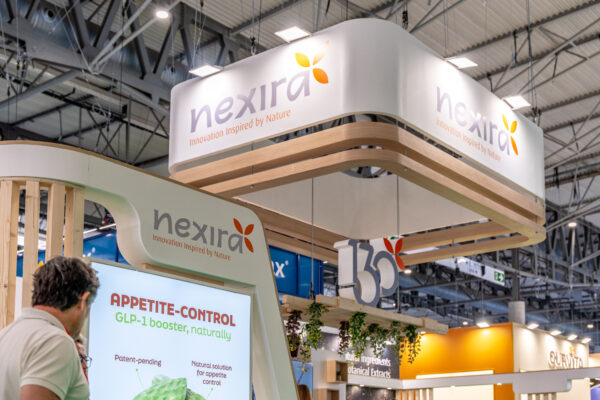
GLP-1: A game-changer for the food & beverage industry
GLP-1 based solutions are moving beyond the health and wellness space and are increasingly influencing everyday eating behaviors. Originally developed for metabolic and weight management purposes, they are now perceived by many consumers as tools that help regulate appetite and eating patterns more broadly.
As adoption continues to grow, GLP-1 is becoming a structural driver of change for the Food & Beverage industry, affecting how much people eat, what they choose, and what they expect from food products.
This shift is already forcing brands to rethink formulation strategies, focusing on nutrition density, satiety, and digestive comfort.
From initial specialized use to large-scale behavioral change
The use of GLP-1 solutions has expanded rapidly. In the United States, adoption is now estimated at around 1 in 8 adults, with several European markets following a similar trend, particularly in higher-income populations.

Rather than being a short-term phenomenon, GLP-1 use appears to be driving longer-term dietary adjustments. Weight regain affects nearly 80% of users after discontinuation, driving long term use and sustained dietary adjustments.
Beyond weight control, these approaches are also associated with broader effects on metabolic health, cardiovascular markers, sleep quality, and cognitive well-being.
For the food industry, this means GLP-1 is no longer a niche health-related topic, but a long-term influence on consumption patterns.
How GLP-1 modifies eating behavior
GLP-1 approaches act directly on appetite regulation. They reduce hunger signals and slow gastric emptying, which leads to faster satiety and lower overall food intake.
This results in several noticeable behavioral changes:
- Reduced portion sizes
- Less frequent snacking
- Lower emotional or impulsive eating
- Stronger preference for simple, light, and nutrient-focused foods
However, lower food intake also introduces nutritional challenges. Some consumers report reduced protein and micronutrient intake, as well as digestive discomfort, fatigue, or constipation.
These effects highlight the growing need for products that are not only lighter, but also nutritionally complete and easy to digest.
Implications for Food & Beverage formulation
As consumers eat less volume, each serving must deliver more nutritional value. This fundamentally changes formulation priorities.
Food and beverage products must now balance:
- High nutrient density in smaller portions
- Digestive tolerance
- Satiety support
- Sustained energy release
- Strong sensory experience despite reduced calories or size
Proteins and dietary fibers are becoming key functional pillars in this new approach, helping brands maintain nutritional quality while adapting to reduced consumption patterns.
Key formulation priorities for brands:
- Develop compact, nutrient-rich products adapted to smaller portions
- Combine proteins and fibers to support satiety and muscle maintenance
- Improve digestive comfort and metabolic balance
- Preserve taste, texture, and enjoyment despite reformulation constraints
Emerging product innovations responding to GLP-1 behaviors
Several recent product developments already reflect this transition.
Nutrient-dense meal solutions
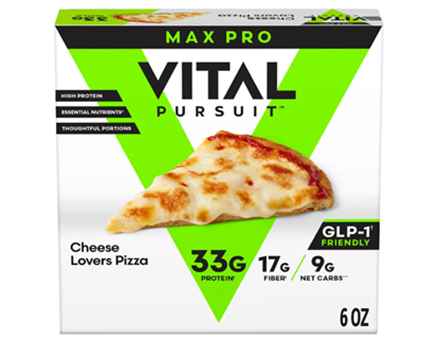
Some brands are designing meals specifically for reduced appetite contexts. These products focus on delivering concentrated nutrition, including meaningful levels of protein and fiber, within smaller serving sizes.
Goodness introduces Vital Pursuit Meals, a range specifically designed for consumers whose eating habits are shaped by GLP‑1–driven appetite changes.
Functional beverages for appetite and energy support
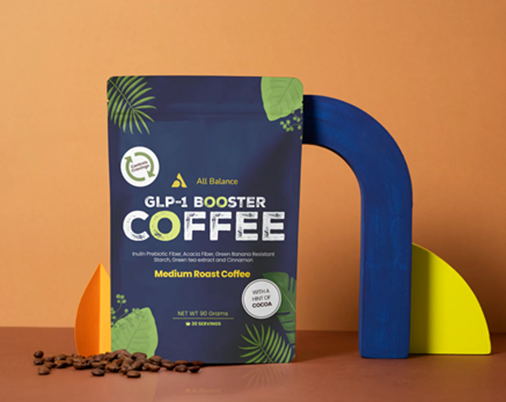
New beverage concepts combine fibers such as acacia fiber with botanical extracts. The goal is to support satiety, digestive comfort, and energy balance within familiar consumption occasions like coffee breaks.
GLP‑1 Booster Coffee is designed by All Balance to support appetite
control and energy management in a context of GLP‑1‑driven eating behaviors.
Lower-calorie snacking alternatives

The snack category is also evolving, with products offering reduced calorie content, lower sugar levels, and added fiber. These formats aim to maintain indulgence while aligning with reduced appetite and portion control behaviors.
With its Encas Gourmand range, Gerlinéa offers crunchy bars, available in red berry and white chocolate flavors, deliver indulgence in a controlled 89‑kcal format, while remaining sources of fiber and featuring a 92% reduction in sugar compared to the average chocolate bar on the market.
Ingredient solutions supporting this transition
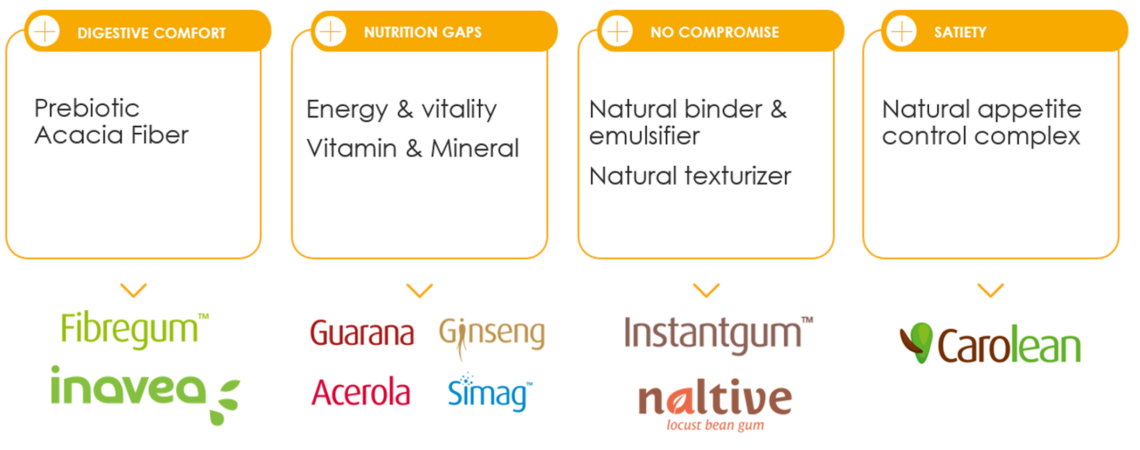
In this evolving context, ingredient innovation plays a central role in helping brands adapt formulations. Nexira’s solutions are fully aligned with this transition, supporting formulators across several key dimensions:
- Digestive health and microbiome support through prebiotic fibers such as acacia fiber
- Satiety enhancement through fiber-based and functional ingredient systems
- Nutritional fortification to help address gaps in protein, vitamins, and minerals
- Texturizing and formulation support to maintain sensory quality in reduced-calorie products
In conclusion, GLP-1 is accelerating a deeper transformation in how consumers eat, moving toward lower volume but higher quality consumption patterns. For the Food & Beverage industry, this requires a shift from calorie reduction strategies to nutrition optimization and functional formulation.
Brands that anticipate these changes will be better positioned to meet evolving consumer expectations around satiety, digestive comfort, and nutrient density.
👉 Looking to adapt your formulations to evolving GLP-1-driven consumer needs? Contact our experts to explore tailored ingredient solutions.

Julie Impérato
Marketing & Communication Manager, Nexira
Picture: Canva – @monkeybusinessimages
This communication is not intended to the final consumer. It provides scientific information for professionals only. Communications to the final consumer have to be checked according to local regulations in force, since the conditions of use are beyond our control. This statement has not been evaluated by the FDA. This product is not intended to diagnose, treat, cure, or prevent any disease.