Tasty and healthy desserts
For a long time, indulgence and nutrition were seen as opposites. Today, that trade-off no longer holds true. Consumers increasingly expect desserts to deliver both pleasure and health benefits—without compromise.
From ice cream to plant-based desserts, the entire category is being reshaped by this new expectation.
So how can brands create desserts that are as delicious as they are nutritious? And what are the key trends—and categories—driving this evolution? Let’s explore.
If you’d like to go faster, feel free to jump straight to the end of the article to register for the webinar.

Taste is still king — but experience makes the difference
Despite growing health awareness, one fact remains: Taste is still the number one driver of food choice.
According to Innova, 2 in 5 consumers globally1 consider taste the most important factor in their at-home food decisions—ranking it above health and nutrition.
But today, taste alone is not enough.
Texture: the new driver of indulgence
Texture has become a key differentiator across dessert categories. It elevates a product from simply “good” to truly memorable:
- Creamy ice creams with crunchy inclusions
- Layered desserts combining mousse, biscuit, and sauce
- Soft, airy baked goods with rich fillings
This is where the concept of “SenseMaxxing” comes into play: maximizing sensory intensity in every bite. Across categories, consumers are looking for multi-textural, immersive, and shareable experiences.
From a formulation standpoint, achieving this level of texture requires high-performing, natural texturizing systems.
For example, Locust Bean Gum can play a key role in delivering creaminess and stability:
- In ice cream, it helps control ice crystal formation and brings roundness and a richer, creamier mouthfeel
- In plant-based formulations, it enhances mouthfeel and mimics dairy-like creaminess
- In fruit preparations or fillings, it contributes to viscosity and stability

Naturalness & clean label: from preference to expectation
Naturalness is no longer a “nice to have”, it’s an expectation. According to Innova Trends survey (2026):
- 48% of consumers actively seek information about food quality before purchasing
- 42% define clean label as products made with natural ingredients
As a result, natural ingredients are perceived as more trustworthy than artificial ones. In the dessert space, this translates into:
- The use of natural texturizers
- Shorter, more transparent ingredient lists
- A focus on simple, recognizable recipes
Naturalness is now at the core of consumer trust.
Dessert categories in transformation
The shift toward “tasty & healthy” is not limited to one segment—it is reshaping the entire dessert landscape.
Frozen dairy & ice cream: indulgence meets functionality
Frozen desserts are at the forefront of innovation. Key trends include:
- High-protein ice creams
- Reduced-sugar formulations
- Use of natural stabilizers and texturizers
- Layered textures and inclusions for sensory impact
Ice cream is evolving from a treat into a permissible indulgence—combining pleasure with added value. This shift is driving increased demand for natural, multifunctional ingredients that can deliver both sensory excellence and clean label positioning.
Within this context, Locust Bean Gum delivers essential texture and stability benefits while maintaining a clean label. It helps formulators balance creaminess, roundness and mouthfeel, which are especially critical in reduced-fat or plant-based recipes, while also controlling ice crystal formation.
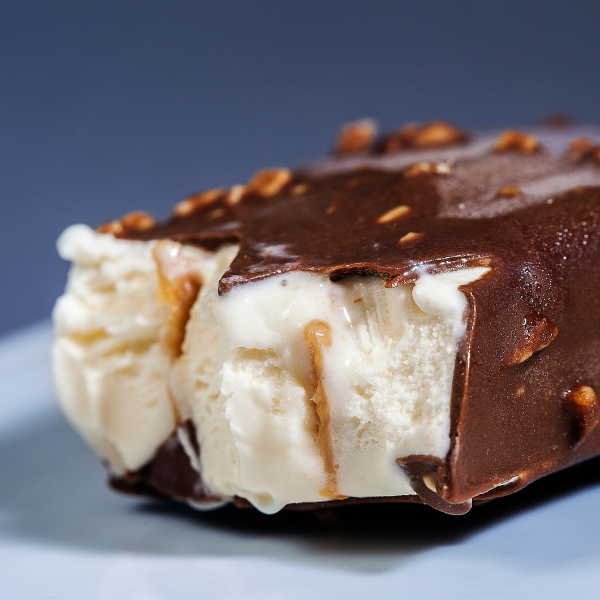
Furthermore, in ice cream applications, acacia gum can support clean label reformulation by replacing mono- and diglycerides of fatty acids as an emulsifier, while also contributing to overall formulation stability.
Plant-based desserts: from niche to mainstream
Growth drivers:
- Dairy-free alternatives (oat, almond, coconut bases)
- Clean label positioning
- Improved texture and creaminess through ingredient innovation
The challenge: replicating the creaminess and mouthfeel of dairy while keeping formulations simple and natural.
Combining texturizers with Acacia fiber offers a dual benefit:
- Nutritional enhancement through fiber enrichment
- Improved mouthfeel and body in low-fat or dairy-free formulations
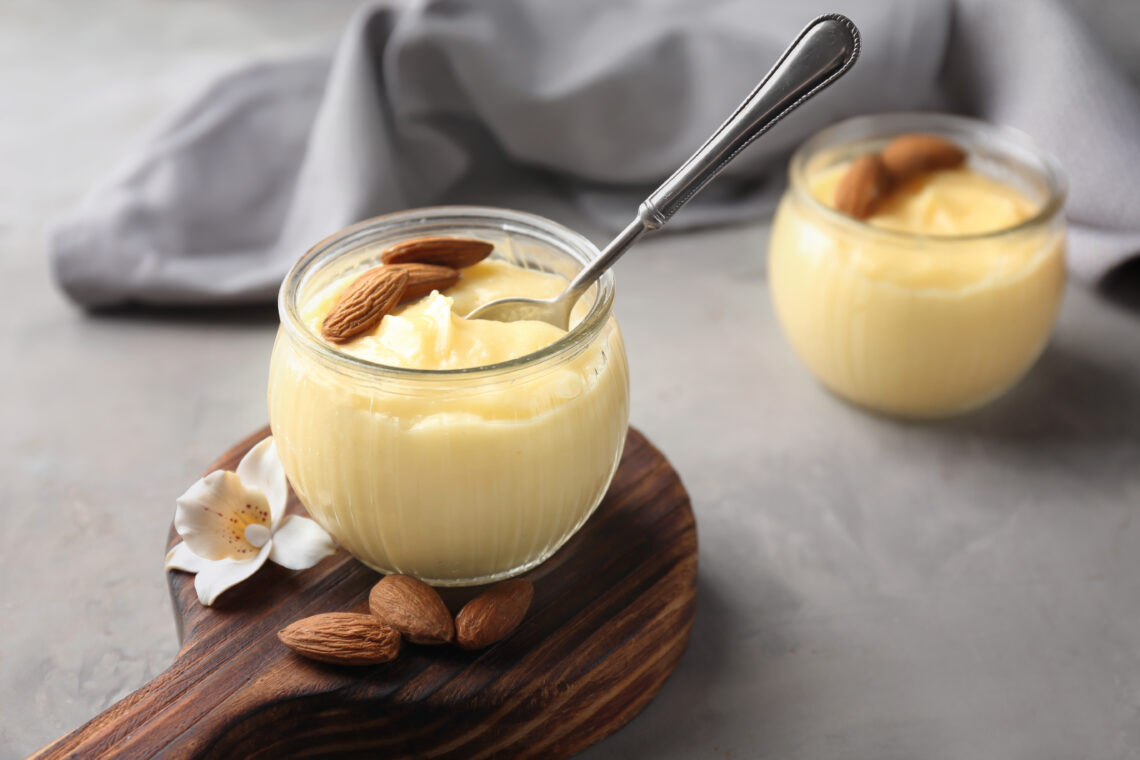
Chilled & spoonable desserts: balancing lightness and indulgence
This category includes yogurts, puddings, mousses, and creamy desserts. Key shifts:
- Protein-enriched or fiber-fortified formulations
- Reduced sugar without loss of texture
- Hybrid positioning (dessert + snack + functional food)
These products are increasingly positioned as everyday indulgences with added benefits.
Acacia fiber is particularly relevant in these applications:
- Easy to formulate (high solubility and stability)
- Excellent digestive tolerance
- Proven prebiotic effect supporting gut health
Baked desserts: reinvention through reformulation
Cakes, biscuits, and pastries are being reimagined through healthier formulations:
- Sugar and fat reduction strategies
- Use of whole grains and fibers
- Clean label emulsification and texturizing ingredients
👉 The challenge is maintaining moisture, softness and structure while improving the nutritional profile. Consumers want “better-for-you” treats without sacrificing pleasure.
In this context, Acacia gum can act as a multifunctional ingredient:
- Binder in cereal bars
- Texture improver in reduced-sugar baked goods
- Contribution to mouthfeel and overall sensory balance
It helps compensate for sugar reduction by maintaining cohesion and indulgence.
Healthier indulgence: finding the right balance
Consumers no longer want to choose between indulgence and health, they expect both. More than 30% of consumers2 say that using natural ingredients and reducing artificial ones is the best way to make indulgent foods healthier.
This shift is driven by three key approaches according to Innova Market Insights:
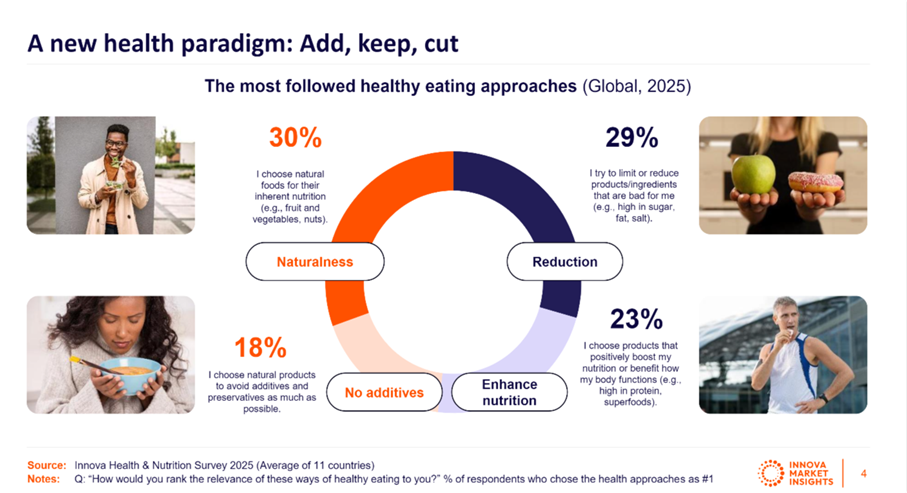
1. Add the Good
Consumers are actively enriching their diets with functional benefits:
- Protein, fiber, biotics, superfoods
- Targeted functional benefits
Food is becoming more functional: consumers are no longer just eating—they are designing desired outcomes, from energy to digestive health and mental well-being.
2. Cut the Bad
Health is increasingly viewed as risk management:
- Reducing sugar, salt, and saturated fats
- Avoiding artificial additives and sweeteners
However, a major challenge remains: how to reduce without compromising taste and texture. This is driving innovation in smart reformulation strategies and the use of natural ingredients like fibers to maintain structure and mouthfeel. Acacia fiber plays a key role here:
it enables sugar reduction while maintaining texture, and delivers added nutritional value through fiber enrichment and prebiotic benefits.
3. Keep it Natural
Naturalness has become a non-negotiable expectation. Consumers are looking for:
- Recognizable ingredients
- Simpler formulations, transparency and authenticity in recipes
Less complexity, more clarity.
Texture + naturalness: the winning formula for future desserts
Across all dessert segments, one thing is clear: success lies in combining sensory performance with clean label and nutrition. This means:
- Maintaining indulgent textures despite sugar or fat reduction
- Delivering indulgent textures using natural solutions
- Creating distinctive sensory experiences
👉 In short: winning through performance, trust, and experience.
What’s next? Let’s explore together
From ice cream to plant-based desserts, from baked goods to chilled indulgence, the opportunity to innovate has never been greater.
But key questions remain:
- How can we formulate desserts that are both indulgent and healthier?
- Which ingredient solutions can deliver on texture, naturalness, and nutrition?
- How can brands meet consumer expectations without compromise in an increasingly competitive space?
Join us in our upcoming webinar: “Tasty & Healthy Desserts: Where Indulgence Meets Nutrition” – Wednesday, 20 May | 1:00 pm ET | 30-minute webinar

In partnership with SupplySide Food & Beverage Journal, Nexira will show how indulgent desserts and treats can be reformulated to remain delicious while delivering meaningful nutritional and functional benefits.
Through a series of ready-to-market product concepts – spanning bakery, ice cream, frozen desserts, bars and beverage treats – we will demonstrate how natural, plant-based ingredients such as Locust Bean gum, a high-performance natural texturizer, and Acacia fiber can help reduce sugar, improve texture and mouthfeel, enhance flavor perception, and support fiber enrichment and better-for-you positioning.
For who?
For R&D, innovation, formulation and marketing teams in bakery, dairy, dessert and plant-based sectors seeking clean-label, sustainable, science-backed solutions that deliver wellness without compromising indulgence.
What you will learn:
- How to create indulgent desserts with improved nutritional profiles
- How fibers support sugar reduction, texture, fiber enrichment and gut health
- How natural multifunctional ingredients enhance binding, creaminess and mouthfeel
- How to develop clean-label, sustainable, better-for-you dessert solutions
We will also host an interactive Q&A session. Feel free to send your questions in advance if you have any specific topics you would like us to address, or ask them live during the webinar.
Speakers

Vincent Delaroche
Executive Account Manager – Nexira, Inc.

Fran Schoenwetter
Director of content marketing – SupplySide, Informa Health & Nutrition

Charlotte Wallart
Food Product Manager
Source:
1: Innova trends survey, now and next in the use of texturizing ingredients – Global – Dec 2024
2 : Innova natural ingredients in F&B in the US – Dec 2024
This communication is not intended to the final consumer. It provides scientific information for professionals only. Communications to the final consumer have to be checked according to local regulations in force, since the conditions of use are beyond our control. This statement has not been evaluated by the FDA. This product is not intended to diagnose, treat, cure, or prevent any disease.